
Bulk handling of biological and chemical agricultural inputs-whether raw seed, granular fertilizer, organic compost, or harvested grain-presents unique challenges: variable moisture, heavy abrasion, sticky fines, and unrefined field debris.
Applying the correct wire mesh configuration transforms raw harvest and bulk materials into high-value, market-ready agricultural products. By controlling particle sizing, removing foreign contaminants, and eliminating fines or agglomerates, agricultural processors achieve cleaner outputs.
1.The Four Applications of Wire Mesh in Agricultural Processing
1.1 Seed Cleaning and Grading
In commercial seed production, non-uniform seed sizes lead to erratic planter metering, uneven germination timing, and scattered emergence across the field-ultimately reducing yield potential per acre. Wire mesh screens serve as the core filtration media in air-screen cleaners, gravity separators, and indent cylinders.
Scalping (Oversize Removal): Heavy-weave mesh strips out large field debris, sticks, pod fragments, and weed stalks before seeds enter fine sizing decks.
Sifting (Undersize/Fines Removal): Fine mesh apertures filter out shriveled seeds, soil dust, broken kernels, and unwanted weed seeds smaller than the desired product grade.
Precision Sizing: Sorting seeds into tight dimensional bands allows modern precision planters to meter seeds accurately, eliminating skips, double-seeding, and seed damage.
1.2 Fertilizer Screening
Granular fertilizers are highly hygroscopic. During shipping, handling, and seasonal storage, ambient humidity and mechanical compaction cause fines to bind together, forming hard lumps and oversized agglomerates. Unscreened fertilizer causes clogged spreader nozzles, uneven field application, and costly mechanical downtime.
De-Lumping & Scalping: High-strength wire mesh installed prior to bagging or bulk loading catches oversized lumps, diverting them to crushers while letting correctly sized granules pass through.
Fines Extraction: Removing sub-millimeter fines eliminates airborne dust hazards during bulk transfer and prevents internal “caking” inside storage silos and spreader hoppers.
Accurate Rate Spreading: Uniformly screened fertilizer ensures consistent flow through broadcast spreaders and pneumatic seeders, preventing localized “crop burn” caused by lump surges.
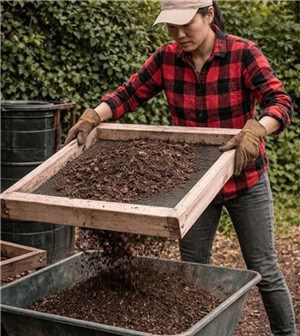
1.3 Compost & Organic Waste Processing
Commercial composting converts municipal green waste, livestock manure, and food processing by-products into rich soil conditioners. However, raw compost contains un-decomposed woody oversized fragments, stones, gravel, and residual contaminants like film plastics and glass. Mesh screening is the definitive step that turns raw compost into marketable, premium-grade soil products.
Primary Coarse Separation (15 mm – 25 mm): Separates oversized wood chips and mulch fragments, returning them to the composting pile for further biological decomposition.
Fine Sifting (3 mm – 10 mm): Produces premium-grade topdressing compost for turf management, commercial landscaping, and nursery potting media.
Contaminant Removal: Captures physical contaminants (stones, hard plastics) to ensure compliance with strict organic standards.
1.4 Grain Handling and Storage
Grain elevators, feed mills, and storage silos handle thousands of bushels per hour during peak harvest. Freshly harvested wheat, corn, barley, and soybeans carry field dust, corn cobs, husks, and tramp metal. Uncleaned grain stored in silos creates major hazards: fine dust pockets restrict airflow, create hotspots for spontaneous heating, and foster mold and insect infestation.
Intake Scalping: Robust woven wire mesh installed at receiving hoppers catches oversized debris before grain enters bucket elevators and drag conveyors, preventing mechanical jams and belt damage.
Storage Preservation: Removing fine screenings improves airflow during bin aeration, ensuring uniform cooling and moisture control that preserves grain quality over long storage periods.
2.Why Stainless Steel Outperforms Alternatives
Agricultural environments are harsh on equipment. Wire screens are subjected to continuous mechanical abrasion from silica dust, chemical exposure from corrosive fertilizers and organic acids, and atmospheric moisture. Industrial Type 304 and 316 Stainless Steel Woven Wire Mesh remains the superior standard for agricultural operations.
Selection Tip: Type 304 and Type 316
Use Type 304 Stainless Steel for standard dry grain intake, seed grading, and dry compost sifting.
Upgrade to Type 316 Stainless Steel for continuous handling of damp chemical fertilizers, highly acidic organic compost, or coastal high-humidity storage facilities, as 316 contains molybdenum to prevent pitting corrosion.
3. Mesh Selection Matrix & Technical Specification Guide
Selecting the right mesh requires balancing three key geometric variables: Aperture Size (w), Wire Diameter (d), and Open Area Percentage (Ao). The open area percentage determines volumetric throughput and is calculated as:
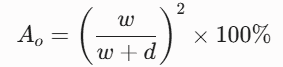
A higher open area increases screen capacity, while a heavier wire diameter increases structural lifespan under heavy loads. Below is a reference matrix for common agricultural applications:
| Application | Separation Goal | Recommended Aperture Size (w) | Typical Wire Gauge (d) | Recommended Weave |
| Small Seed Grading | Canola, Clover, Mustard, Sesame | 0.8 mm – 1.8 mm (10 – 20 Mesh) | 0.45 mm – 0.70 mm | Plain Weave |
| Large Seed Sizing | Corn, Soybeans, Wheat, Peas | 2.5 mm – 6.5 mm (3 – 8 Mesh) | 0.90 mm – 1.60 mm | Square Plain / Slotted Mesh |
| Fertilizer Screening | Urea, NPK Granules (2 – 4 mm) | 1.5 mm (Fines) / 5.0 mm (Clumps) | 0.80 mm – 1.20 mm | Plain Weave / Self-Cleaning Harp |
| Compost Sifting | Premium Soil vs. Coarse Mulch | 4.0 mm – 12.0 mm (Coarse Screen) | 1.50 mm -2.50 mm | Crimped Woven |
| Grain Intake Scalping | Bulk Wheat, Corn, Barley Intake | 8.0 mm – 20.0 mm Scalping Screen | 2.00 mm – 3.50 mm | Double Crimped / Heavy Lock Crimp |
Industrial wire mesh is far more than a simple barrier-it is a precision sizing tool that directly protects downstream machinery, elevates crop market value, and boosts agricultural processing margins. Specifying the correct mesh, wire diameter, and aperture configuration ensures your facility operates at peak throughput.
Whether you need high-precision stainless steel wire cloth for seed cleaning or heavy-duty crimped screens for fertilizer and compost screening, our engineering team can assist with custom fabrication and technical selection.
Contact our wire mesh specialists today to discuss your process requirements!
Leave a Reply