
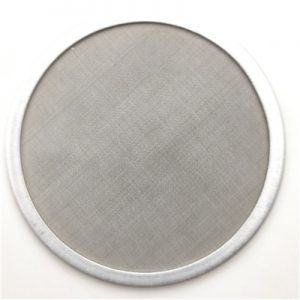
Stainless steel is the industry standard for extruder screen meshes, primarily due to its exceptional durability and corrosion resistance. These screens play a critical role in the polymer filtration process, ensuring melt purity and protecting downstream equipment.
Extruder screen meshes range is from 10mesh to 500mesh or more:
Coarse Mesh (10 Mesh): Used for removing large contaminants and providing structural support.
Intermediate Mesh (40 to 60 Mesh): The standard range for general-purpose filtration.
Fine Mesh (100 to 500 Mesh): Utilized for high-precision filtration and removing microscopic impurities.
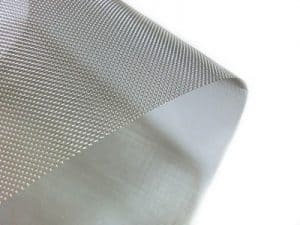
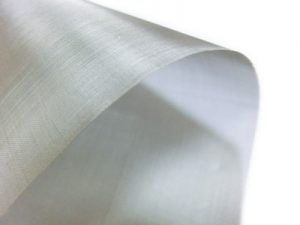
Square Weave vs. Dutch Weave
While most screens utilize a simple square weave (equal wire diameter in both directions), specialized applications often require a Dutch Weave.
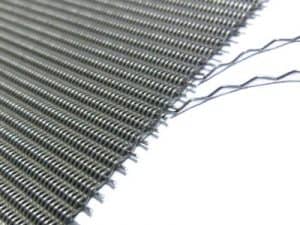
Design: Dutch weave features thicker horizontal wires and thinner, more closely packed vertical wires.
Specification: It is defined by two numbers (e.g., 24x100mesh or 30x 150mesh).
Advantage: This weave allows for ultra-fine filtration and higher mechanical strength without the need for multiple thin screens, optimizing flow and pressure.
Screen Pack Arrangement
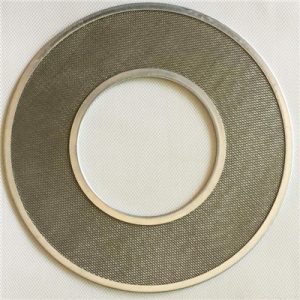
To ensure the longevity of the filtration system, screens are typically arranged in a “screen pack.” The traditional sequence involves placing the coarsest mesh against the breaker plate and the finest mesh facing the extruder screw.
Example Layering Sequence:Screw Side: 80 Mesh (Fine)Middle: 60 Mesh (Intermediate)Breaker Plate Side: 40 Mesh (Coarse)
This structural gradient prevents the fine screens from collapsing under high pressure. By supporting the fine mesh with coarser layers, you prevent “blow-through” contamination where high-pressure melt forces debris through the breaker plate holes.
Leave a Reply