
When choosing a filtration screen, most people focus on the slot size. While slot size is important, there is another critical factor that dictates how well your system will perform: Open Area.
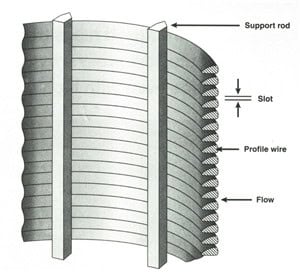
What is Open Area?
Open area is the percentage of the total screen surface that is completely open for liquid or gas to flow through.
Open area directly determines three critical things in your system:
Throughput capacity: How much volume the screen can handle per minute.
Pressure drop: How hard your pumps have to work to push fluid through the screen.
Equipment sizing: How large and expensive your overall filtration machinery needs to be.
How to Calculate Open Area
Calculating the open area of a wedge wire screen is straightforward. It relies on just two measurements: the width of the slot and the width of the profile wire.
The formula is Open Area (%) = Slot Width / (Slot Width + Wire Width) x 100.
Let’s look at how changing just the wire width can drastically alter your screen’s performance:
Screen A: Has a 0.50 mm slot and a 1.50 mm wire width. Using the formula, its open area is 25%.
Screen B: Has the exact same 0.50 mm slot, but uses a narrower 1.00 mm wire width. Its open area jumps to 33%.
By simply choosing a smarter wire profile, you get a massive boost in capacity without changing the physical size of your machine.
Wedge Wire and Perforated Plate
If you are choosing between wedge wire and standard perforated metal plates, open area is where wedge wire completely dominates.
| Screen Type | Open Area Range | Why It Performs Differently |
| Wedge Wire Screen | 15% to 65% | V-shaped wires take up less surface width relative to the slot openings, leaving more room for flow. |
| Perforated Plate | 20% to 35% | Requires large solid metal spaces between the round punched holes to maintain structural strength. |
At same separation sizes, wedge wire consistently delivers significantly higher open area and better flow dynamics than a perforated plate.
Three Benefits of a Higher Open Area
Use a wedge wire screen with a maximized open area offers three operational advantages:
1. More Flow Capacity per Unit Area
Because more fluid can pass through each square meter of the screen, you can handle high-volume jobs with much smaller equipment. This saves valuable floor space in your plant and cuts down on initial machinery costs.
2. Lower Pressure Drop
When fluid passes through a screen easily, the pressure behind the screen stays low. This means your pumps don’t have to work overtime, resulting in lower energy bills and less wear and tear on your pumping systems.
3. Reduced Fluid Velocity
A larger open area allows fluid to pass through the slots at a slower speed. Slower moving fluid creates less turbulence, decreases abrasive wear on the wires, and yields much better separation accuracy.
A Smart Tip: Always Compare at the Same Slot Size
When you are comparing quotes from different screen manufacturers, always look at the open area percentage at the exact same slot size.
For example, if you need a 0.5 mm separation:
Manufacturer A might offer a panel with 40% open area.
Manufacturer B might offer a cheaper panel with 20% open area.
The panel with 40% open area will deliver twice the flow of the 20% panel. To get the same performance out of the cheaper screen, you would have to buy a machine that is double the size. In the industrial field, the price difference between a high-efficiency screen and a low-efficiency screen is far less than the massive cost of doubling your equipment’s surface area.
Need Help Optimizing Your Screen Design?
Getting the perfect balance of open area, slot precision, and structural strength requires expert engineering. Whether you need heavy-duty industrial screens or specialized stainless steel filtration components, we can help design the ideal configuration for your application.
Contact our technical support team today with your project specifications, and we will help you calculate the most efficient wedge wire solution for your business.
Leave a Reply