
Selecting the best industrial screen requires a clear comparison of wedge wire, woven wire mesh, and perforated plates. Understanding how each option performs under different conditions helps you pick the right system for your specific project.
Wedge Wire vs. Woven Wire Mesh
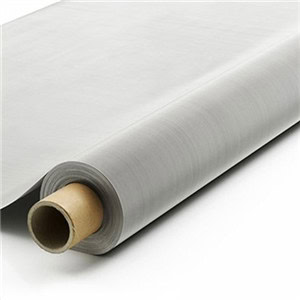
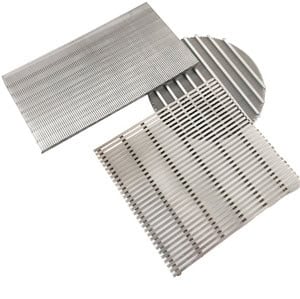
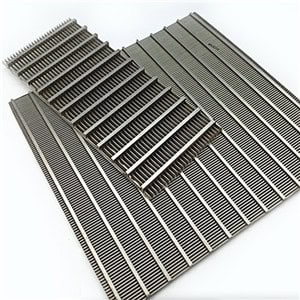
Woven mesh uses interlaced wires like fabric to create a flexible separation surface. However, welded wedge wire offers several clear industrial advantages over this interlocking design:
Fixed Slot Size: Individual welds lock wedge wire slots tightly in place so they never change size. Woven mesh gaps can stretch and shift under heavy shaking, pressure, or friction, causing incorrect filtering over time.
Higher Flow Rates: Wedge wire keeps a large open area (15% to 65%) even with tiny gaps. Woven mesh has wires that cross over each other, which blocks fluid flow and drops the open area during fine separations.
Longer Life: Wedge wire screens usually last between 5 and 10 years in most applications. Woven mesh breaks down much faster because the wires constantly bend and fatigue under mechanical stress.
When to use woven mesh:
Choose woven mesh for ultra-fine filtering below 25 microns where wedge wire cannot achieve. When you need a flexible screen shape.
When initial cost is the primary consideration.
Wedge Wire vs. Perforated Plate
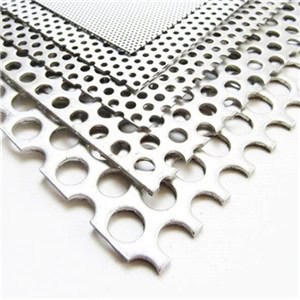
Perforated plates are made by drilling or punching round holes into a solid sheet of metal, which functions differently than the long, continuous slots of wedge wire:
Greater Product Throughput: At a 1 mm gap, wedge wire provides a 35% to 45% open area, while perforated plates with 1 mm holes only manage 23% to 30%. This extra open area directly increases your processing capacity and helps reduce required equipment sizing.
Excellent Clogging Resistance: Wedge wire utilizes V-shaped slots that prevent material from getting stuck inside the openings. Round holes in perforated plates frequently trap near-sized, long, or oddly shaped particles.
Stable Accuracy as it Wears: As wedge wire rubs down from friction, the slot width changes very slowly because the size is controlled at the narrowest top edge. Round holes in perforated plates grow larger linearly with wear, which quickly ruins your sorting accuracy.
When to use perforated plates:
Select perforated plates for rough sorting pieces above 5 mm where open area matters less, projects that need high impact resistance from a solid plate, or simple non-moving drainage tasks.
Performance Summary
| Feature | Wedge Wire Screens | Woven Wire Mesh | Perforated Plates |
| Slot Stability | Fixed by strong welds | Shifts and stretches under stress | Rigid holes, but they grow larger over time |
| Anti-Clogging | High resistance due to V-shape slots | Moderate resistance; particles can trap | Low resistance; easily traps near-size particles |
| Best Used For | High-flow, precise sorting | Ultra-fine applications under 25 microns | Heavy impacts and sizes above 5 mm |
Leave a Reply